
Approve your content once. It updates everywhere — the moment you change it.
Locations. Statutory wording. Role descriptions. Campaign messaging. The data your brand depends on, governed in one place, flowing into every linked template automatically.
Change your opening hours once. Every poster, leaflet, and email across all your locations updates instantly.
Set once. Stays right. Audit-trailed end-to-end.
Most distributed brands don't have a content problem. They have a “which version was approved?” problem.
The brand guide says one thing. The CRM says another. The shared drive has last quarter's version. The franchisee's saved template has the version from three quarters ago. When the data changes, nobody updates everywhere it lives. And when a regulator asks “show me what was approved on this date” — nobody can.
Content Central makes the approved data the only data. And logs every version of it.
How it works
How it works, in three steps
Build
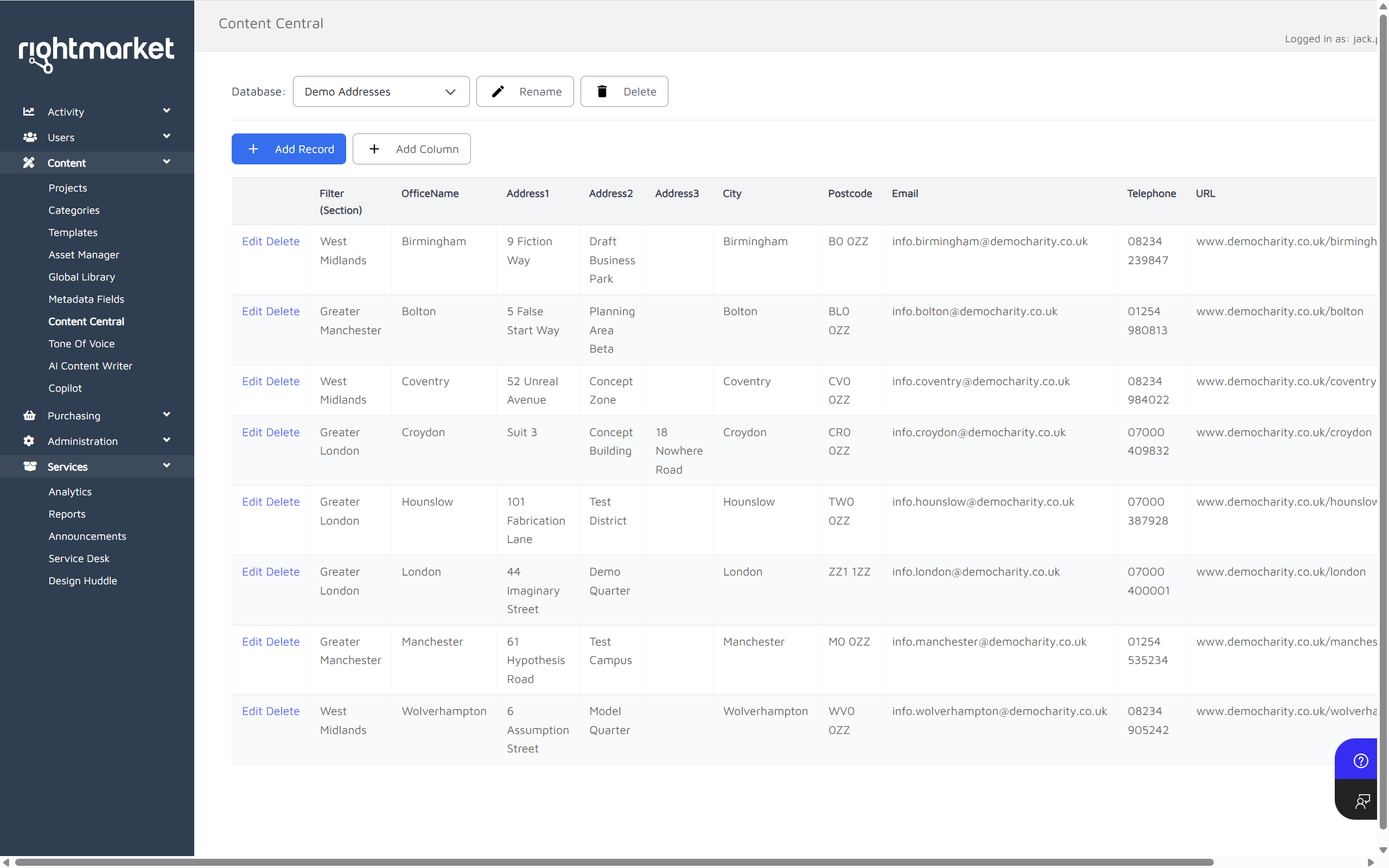
Admins create databases for the data your brand depends on — locations, statutory wording, role types, campaign messaging. Sign-off happens once, here.
Link
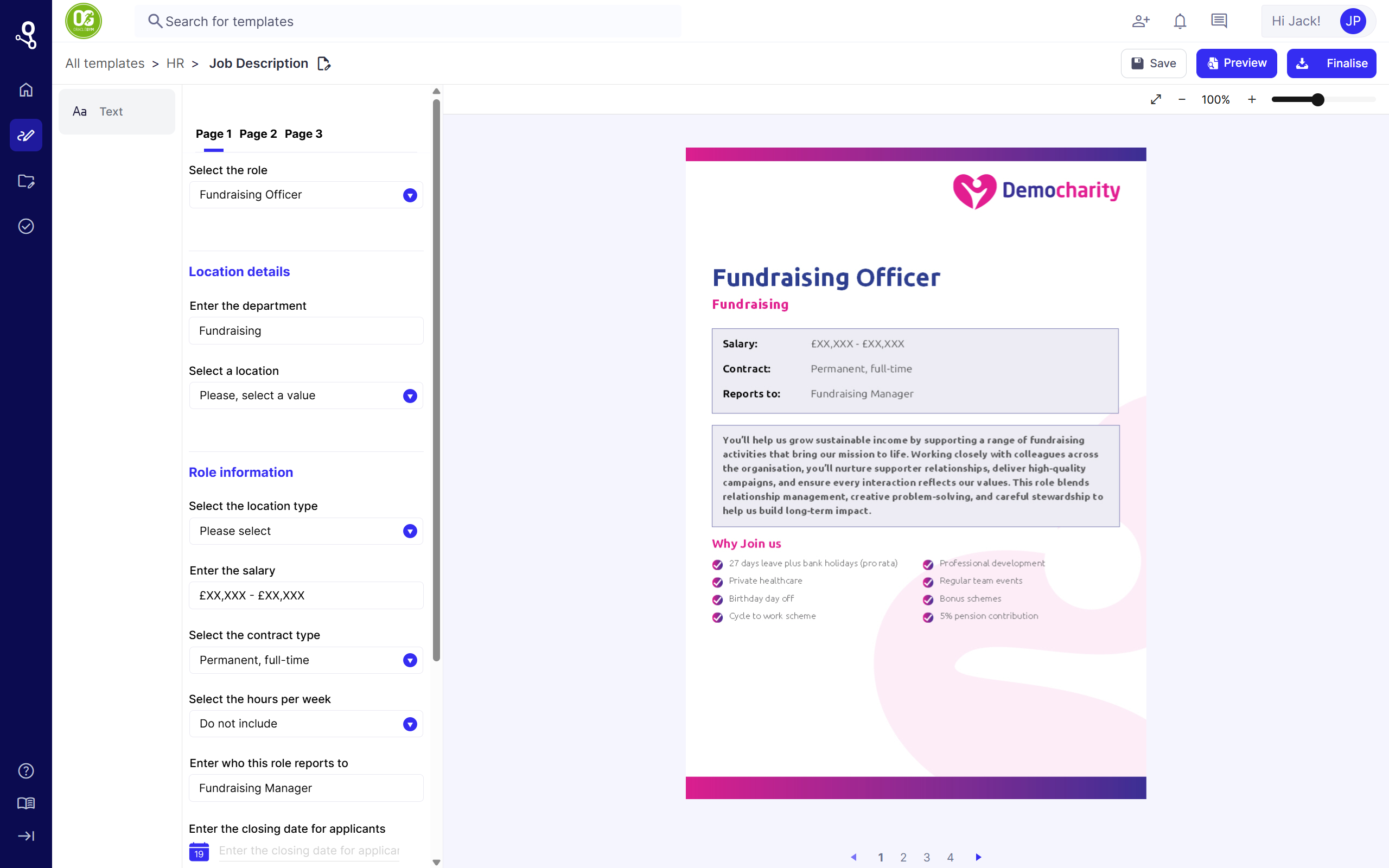
Wherever that data lives in a template, the field is wired to the database. Users pick from approved options. Or the field auto-fills from their profile.
Update
Change a value. Every linked template reflects it instantly. No republishing. No version chasing. No stale wording surfacing six weeks late.
Compliant by design. Not by chance.
Off your plate
What you stop worrying about
Four things Content Central takes off your plate the day you turn it on.
Stale data on live materials
One update propagates everywhere. Nothing falls behind.
Manual entry errors
Users pick from approved options. There's no freeform field to typo.
Approval bottlenecks
Content built from CC records is pre-approved. It skips the queue.
"Show me what was approved on…"
Every record is timestamped, attributed, and version-controlled. The audit answers itself.
In the field
Where Content Central earns its keep
Different sectors. Same pattern. The data behind the templates is what creates the risk.
Network-wide consistency
Unit-level addresses, hours, pricing, regional contacts.
Your network is only as compliant as its least-compliant unit. CC propagates the fix the day you make it.
Statutory wording
Charity number, "registered in England and Wales", GDPR disclosures, gift aid declarations.
One wrong number across thousands of outputs is one Charity Commission finding waiting to happen.
Live campaign data
Active totals. Beneficiary stats. In-aid-of language.
Out-of-date stats in fundraising materials embarrass donors and break trust. CC keeps them current everywhere.
Role-type databases
Competencies, accessibility language, salary band wording.
Hiring managers pick the role; the approved language assembles itself. HR reviews once. Every advert inherits it.
Multi-campus, multi-faculty
Campus contacts, course requirements, OfS transparency wording, accessibility statements.
OfS expects consistency. Faculty drift is a compliance finding waiting to happen.
Partnership data
Co-branded wording, disclosure language, in-aid-of copy.
The partnership team stops rebuilding from scratch for every new corporate engagement.
Right fit?
Is this you?
If you can tick three of these, Content Central will pay for itself in months.
- The same data appears in many outputs
- That data changes often, or unpredictably
- A central function is accountable for accuracy
- Proving you got it right matters — to a regulator, a trustee, a franchisor, or a donor
If your messaging rarely changes and your network is small, manual updates may be enough. Content Central is for organisations where many people publish, the data changes often, and proving you got it right is non-negotiable.
What to do next
See Content Central in action
Book a demo and we'll walk through your specific content workflow — and show you exactly how Content Central keeps every asset on-brand and on-message before it goes out.